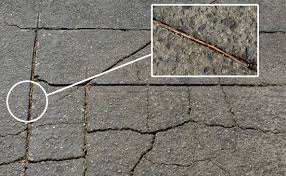
Technical Standards for Rapid-Set Infrastructure Restoration
The following guidelines are provided to assist engineers and specifiers in the selection and installation of Percol® high-performance polymers. These specifications are designed to meet the rigorous demands of Portland Cement Concrete (PCC) and Asphalt Concrete (AC) pavement restoration where rapid traffic return and structural durability are mandatory.
1. Percol® Rapid-Set Pavement Repair Specifications
(Concrete and Asphalt Restoration)
This specification covers the requirements for rapid-setting urethane resins used in the structural repair of cracks, spalls, and potholes in highway, bridge, and industrial pavements.
-
Material Requirements: The repair polymer shall be a two-component, 100% solids, ultra-low viscosity urethane resin. It must demonstrate a 10-minute traffic readiness and maintain flexibility across a temperature range of -20°F to 120°F.
-
Surface Preparation: All repair zones must be clean, sound, and 100% free of moisture. Use of a heat lance or dry compressed air is required to remove debris and surface humidity.
-
Application Method: * Flood Method: For spalls and wide cracks, clean, dry, kiln-fired aggregate shall be pre-placed in the repair zone. The polymer shall then be dispensed (machine or hand) to saturate the aggregate to grade.
-
Topping: A non-skid broadcast sand shall be applied to the surface of the wet polymer to ensure skid resistance and aesthetic matching.
-
-
Compliance: Materials must meet or exceed performance metrics for ASTM C579 (Compressive Strength) and ASTM C884 (Thermal Compatibility).
2. Detector Loop Installation & Encapsulation
(Traffic Engineering and Signalization)
This work consists of the installation and sealing of traffic detector loops in accordance with Section [Insert Local Section] of the Standard Specifications, with the following technical enhancements:
-
Sealant Specification: Loop sealer shall be a rapid-setting, two-component urethane resin (Percol®).
-
Performance Criteria: The sealer must remain flexible to accommodate thermal expansion/contraction of the pavement while maintaining a waterproof, airtight seal around the sensor wiring.
-
Encapsulation: The resin shall be poured directly into the saw-cut trench, fully encapsulating the loop wires and sealing the base against water intrusion and chemical erosion from de-icing salts.
-
Operational Readiness: The encapsulated loop must be ready for traffic and signal testing within 10 to 15 minutes of application.
Engineering Resources & Yield Tools
Technical Submittals (PDF)
Planning & Estimating
Accurate material yield is critical for project cost-efficiency. Use our integrated calculators to determine exact gallon requirements for your specific joint and crack dimensions.
Technical Notice & Limited Warranty
Suitability of Use: Recommendations for product use are based on tests believed to be reliable. However, as field conditions vary widely, the user must determine product suitability for the particular use and specific method(s) of application.
WARRANTY & LIMITATION OF LIABILITY: The following is made in lieu of all warranties, express or implied, including implied warranties of merchantability and fitness for a particular purpose. Seller’s and manufacturer’s only obligation shall be to replace such quantity of the product proved to be defective.
NEITHER SELLER NOR MANUFACTURER SHALL BE LIABLE FOR LOSS OR DAMAGE, DIRECT, INCIDENTAL, OR CONSEQUENTIAL, REGARDLESS OF THE LEGAL THEORY ASSERTED, INCLUDING NEGLIGENCE AND/OR STRICT LIABILITY. > The foregoing may be altered only by an agreement signed by officers of the seller and manufacturer. Nothing in this data sheet is intended as a recommendation to use our products so as to infringe on any patent.