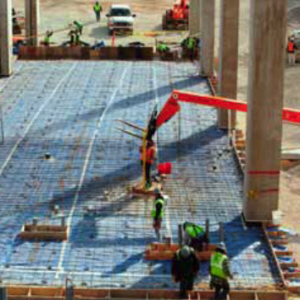
High-Performance Gas & Moisture Barrier Systems
Controlling sub-slab moisture vapor transmission and soil gas infiltration is critical to long-term building performance. Excess moisture can contribute to flooring failure, mold growth, adhesive breakdown, and indoor air quality issues. Soil gases such as radon and methane present additional environmental and liability concerns.
Our GeoVapor® and GeoVapor Plus™ barrier systems are engineered to provide dependable protection beneath concrete slabs-on-grade and foundation systems in commercial, residential, and industrial construction.
Why Under-Slab Vapor & Gas Barriers Matter
Concrete is porous. Without a properly specified and installed vapor retarder, moisture vapor transmission (MVT) can migrate upward through the slab, leading to:
-
Floor covering delamination
-
Adhesive degradation
-
Mold amplification
-
Corrosion of embedded metals
-
Elevated relative humidity within conditioned spaces
In certain regions, soil gases such as radon and methane require mitigation strategies incorporated directly into the building envelope. High-performance gas barriers significantly reduce soil gas intrusion and help meet environmental compliance standards.
Compliance & Industry Standards
Our under-slab vapor barriers are manufactured to meet or exceed relevant industry performance criteria, including:
-
ASTM E1745 – Standard Specification for Plastic Water Vapor Retarders Used in Contact with Soil or Granular Fill Under Concrete Slabs
-
ASTM E96 – Water Vapor Transmission
-
ASTM D1709 – Impact Resistance
-
ASTM D882 – Tensile Properties
-
ASTM E1993 / E2178 – Air & gas transmission testing (where applicable)
Specifiers can select performance classes based on project risk level, slab design, and occupancy type.
Product Performance Overview
GeoVapor 6, 10 & 15 Mil Under-Slab Barriers
Designed for moisture vapor control beneath slabs-on-grade, the GeoVapor Series provides:
-
Multi-layer polyethylene construction
-
High puncture resistance
-
Strong tensile properties
-
Durable seam integrity
-
Available in multiple thicknesses to match project demands
Typical applications:
-
Residential slab construction
-
Light commercial projects
-
Warehouses
-
Retail buildings
GeoVapor G 15 Mil (Green Core)
A 3-layer co-extruded barrier containing post-consumer recycled content in the core layer, while maintaining high performance characteristics.
Key advantages:
-
Sustainable construction contribution
-
Strong puncture and tear resistance
-
Moisture vapor transmission control
-
Meets stringent building code requirements
Suitable for projects targeting environmental certifications or sustainability benchmarks.
GeoVapor Plus™ 20 Mil Vapor / Gas Barrier
A premium seven-layer co-extruded membrane incorporating advanced polyethylene and EVOH resins for enhanced gas resistance.
Performance benefits:
-
Extremely low vapor transmission rate
-
Reduced radon and methane permeability
-
Exceptional puncture resistance for demanding jobsite conditions
-
Superior impact strength
-
Designed for high-risk sites and critical structures
Recommended for:
-
Healthcare facilities
-
Schools
-
Multi-family residential
-
Industrial facilities
-
Brownfield redevelopment sites
-
Radon mitigation applications
Gas Protection: Radon & Methane Mitigation
In areas with elevated soil gas concentrations, building codes increasingly require mitigation systems. High-performance underslab gas barriers:
-
Reduce radon entry pathways
-
Help control methane migration
-
Enhance passive or active venting system effectiveness
-
Support compliance with environmental testing requirements
When paired with proper seam taping, pipe boot detailing, and sub-slab venting systems, these barriers become a key component of the building envelope.
Installation Best Practices
Barrier performance is directly tied to installation quality. Recommended practices include:
-
Smooth, compacted subgrade preparation
-
Overlapping seams per manufacturer guidelines
-
Sealing penetrations with compatible boots and tapes
-
Protecting membrane during reinforcement placement
-
Avoiding unnecessary foot and equipment traffic
Proper detailing at grade beams, footings, and penetrations is essential to maintain gas continuity.
Accessory Systems Available
To support complete installation, we provide:
-
Seam tapes
-
Pipe penetration boots
-
Termination bars
-
Mastic sealants
-
Repair patches
-
Protective overlay fabrics (when required)
A complete system approach ensures optimal field performance.
Applications
-
Slabs-on-grade
-
Foundation systems
-
Crawl spaces
-
Post-tension slabs
-
Industrial floor systems
-
Residential foundations
-
Radon and methane mitigation projects
Selecting the Right Barrier Thickness
Barrier selection should consider:
-
Soil conditions
-
Construction traffic exposure
-
Building occupancy risk
-
Gas presence testing
-
Flooring sensitivity (wood, vinyl, epoxy, etc.)
-
Structural engineer or architect specifications
Higher mil thickness typically correlates with greater puncture resistance and lower vapor permeance, particularly important in high-value or sensitive interior environments.